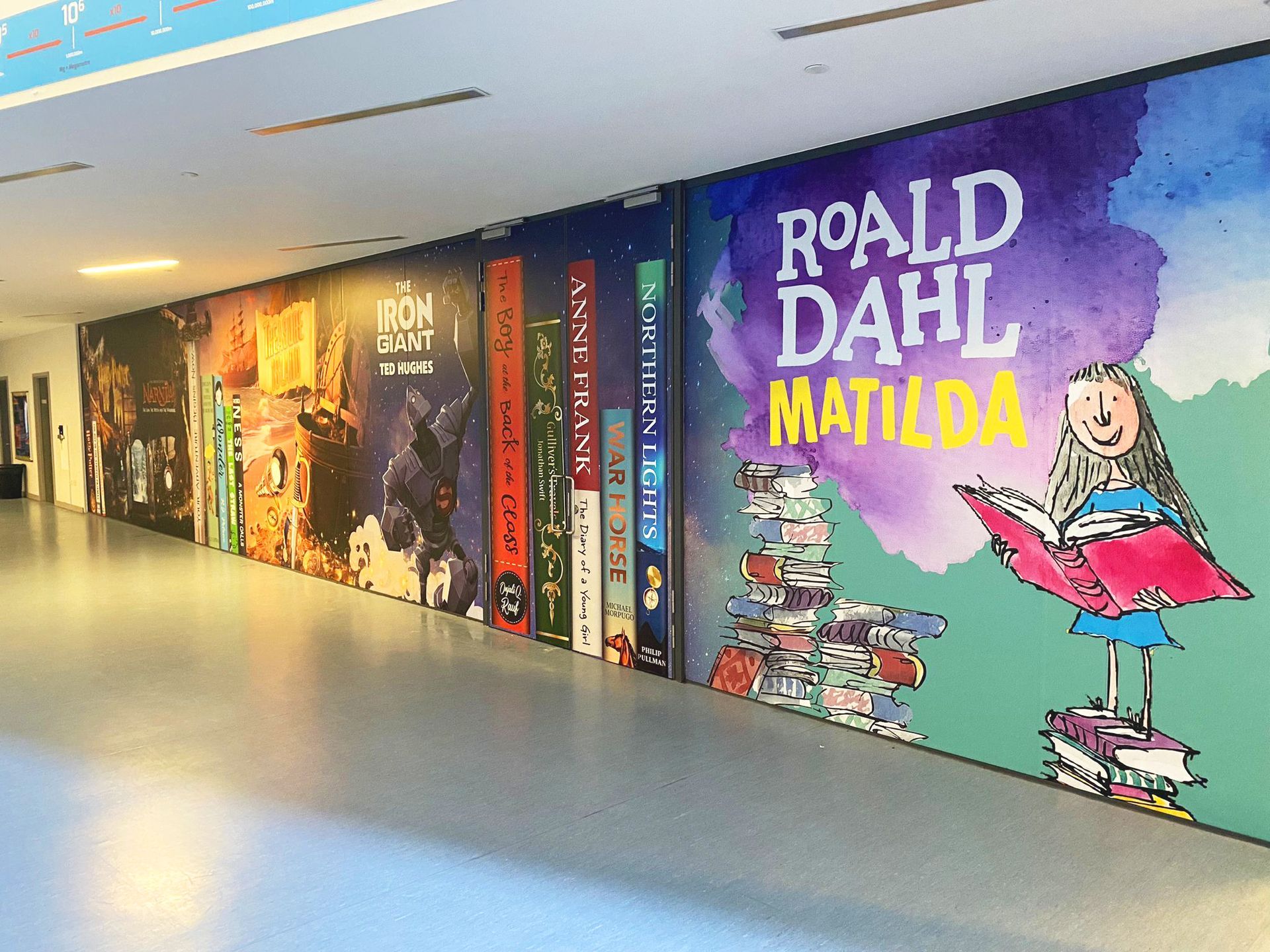
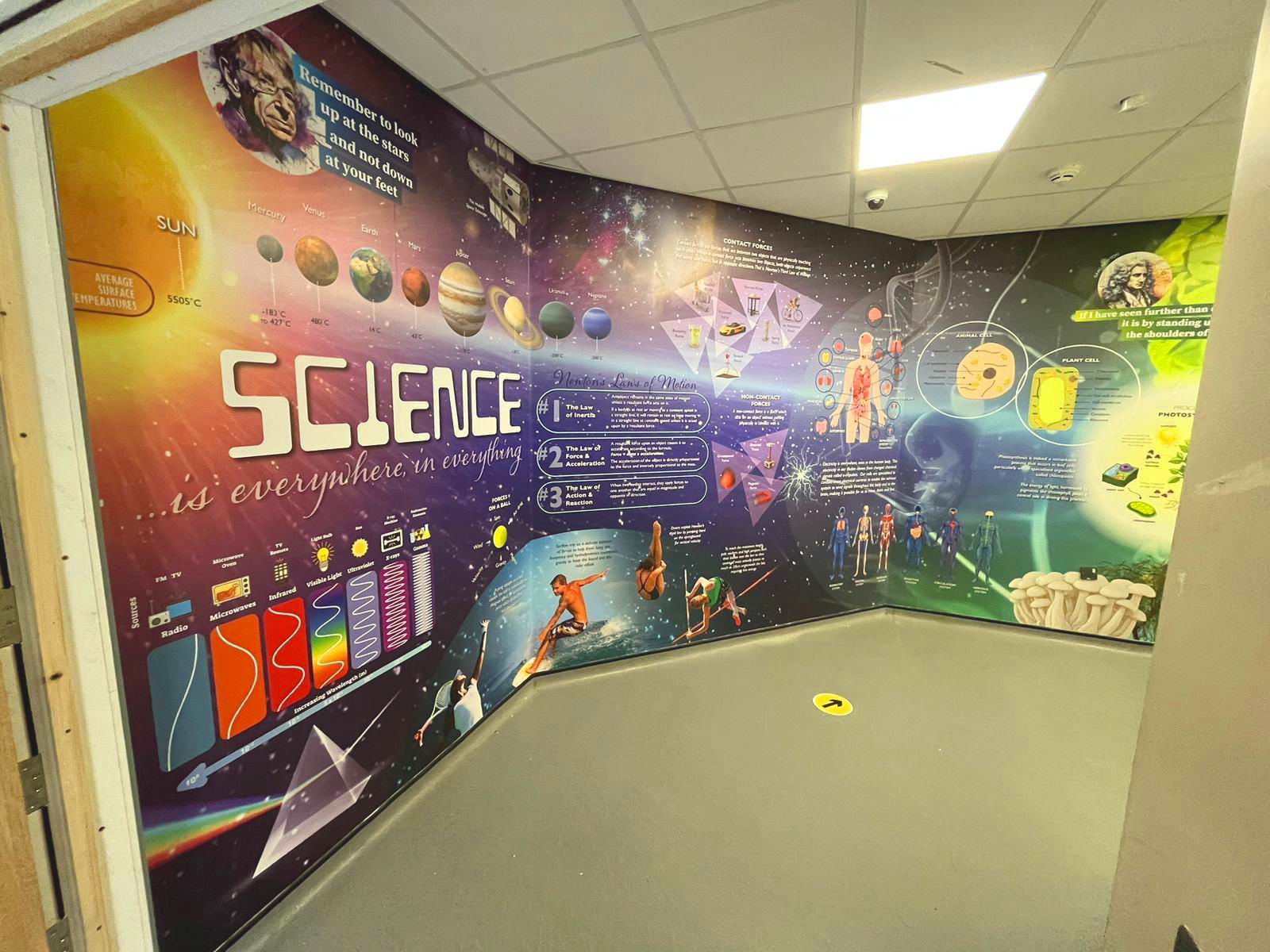
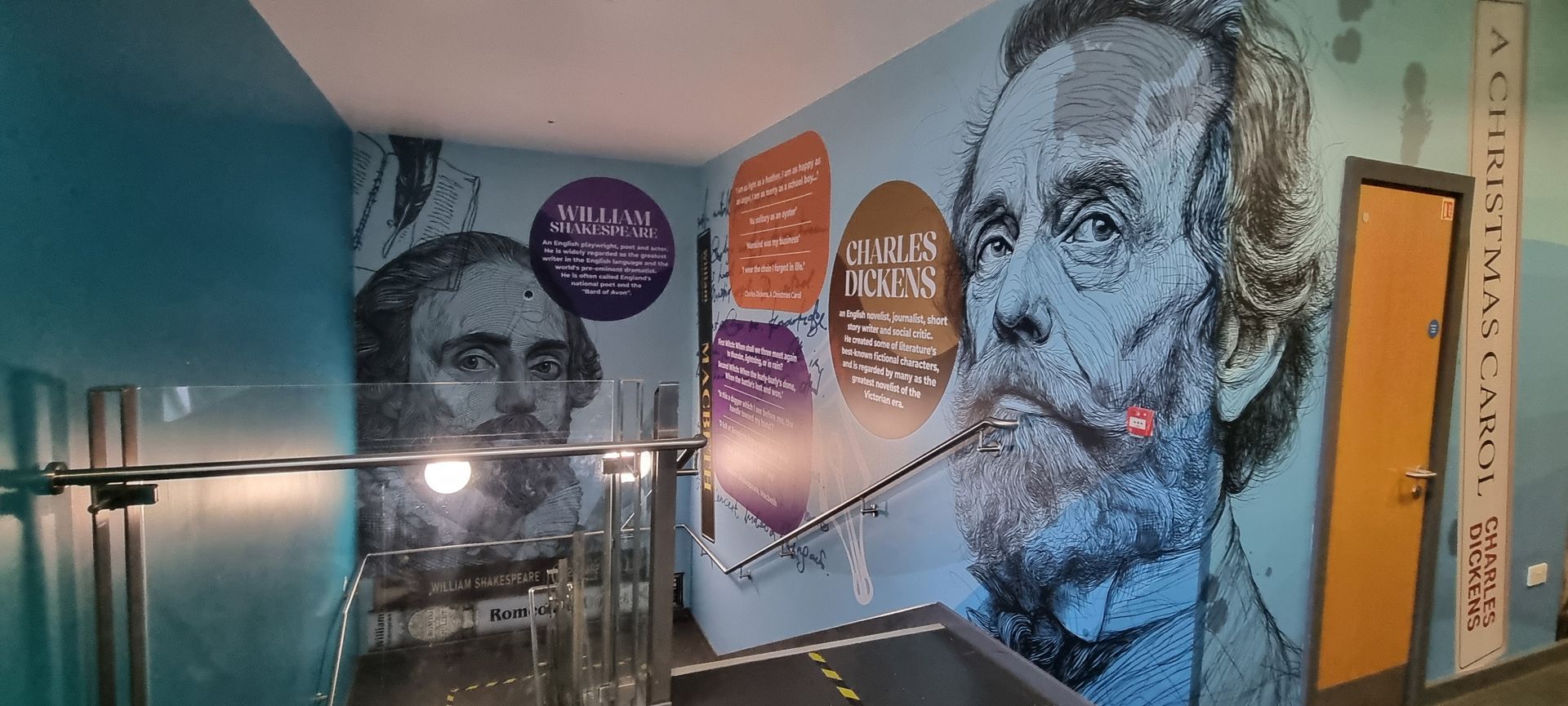
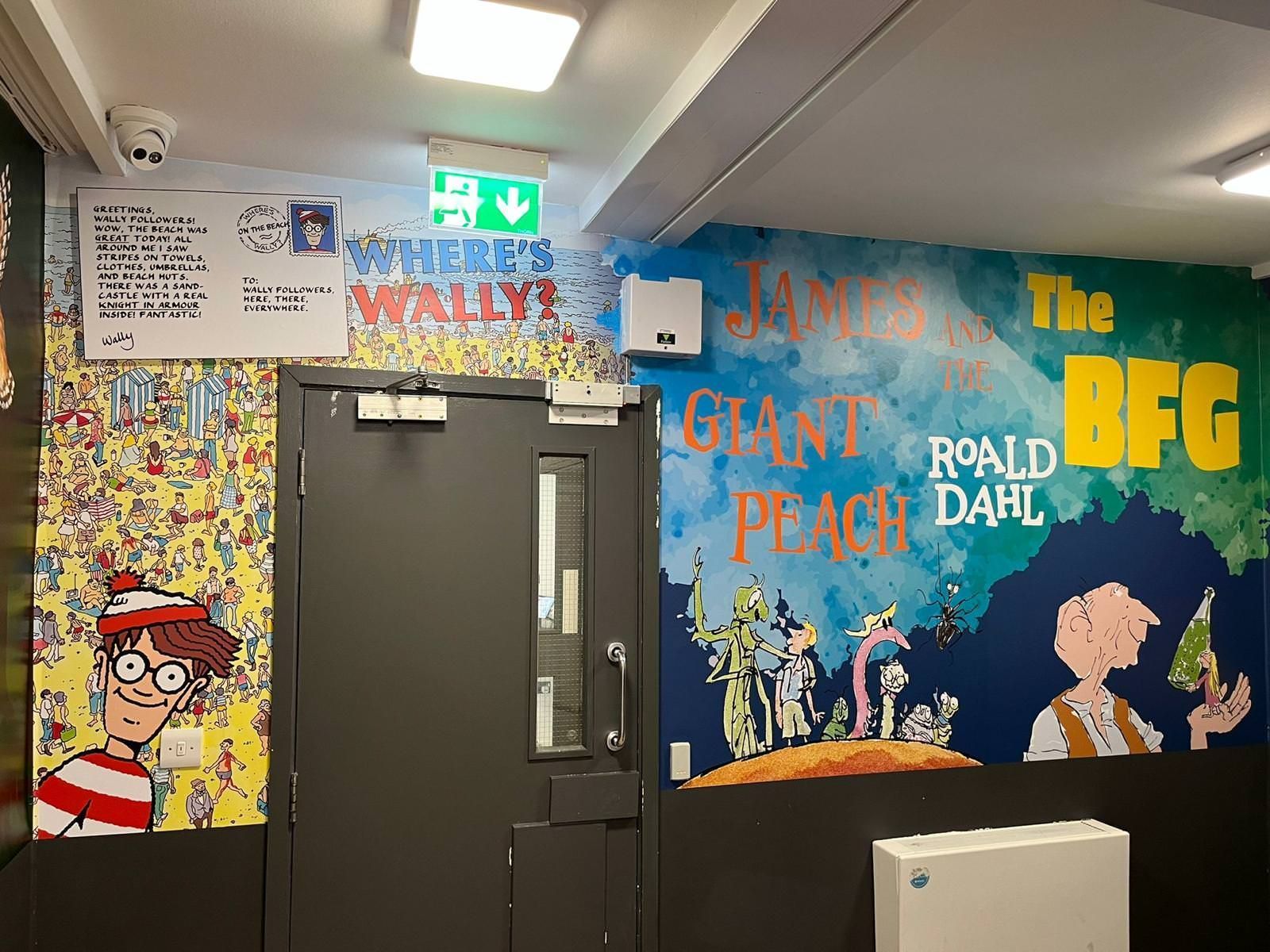
Impact on pupils 7

Passive Reinforcement in Education: Besides supporting lessons, wall graphics can reinforce concepts over time. Students regularly exposed to these aids may find absorbing and remembering information easier.
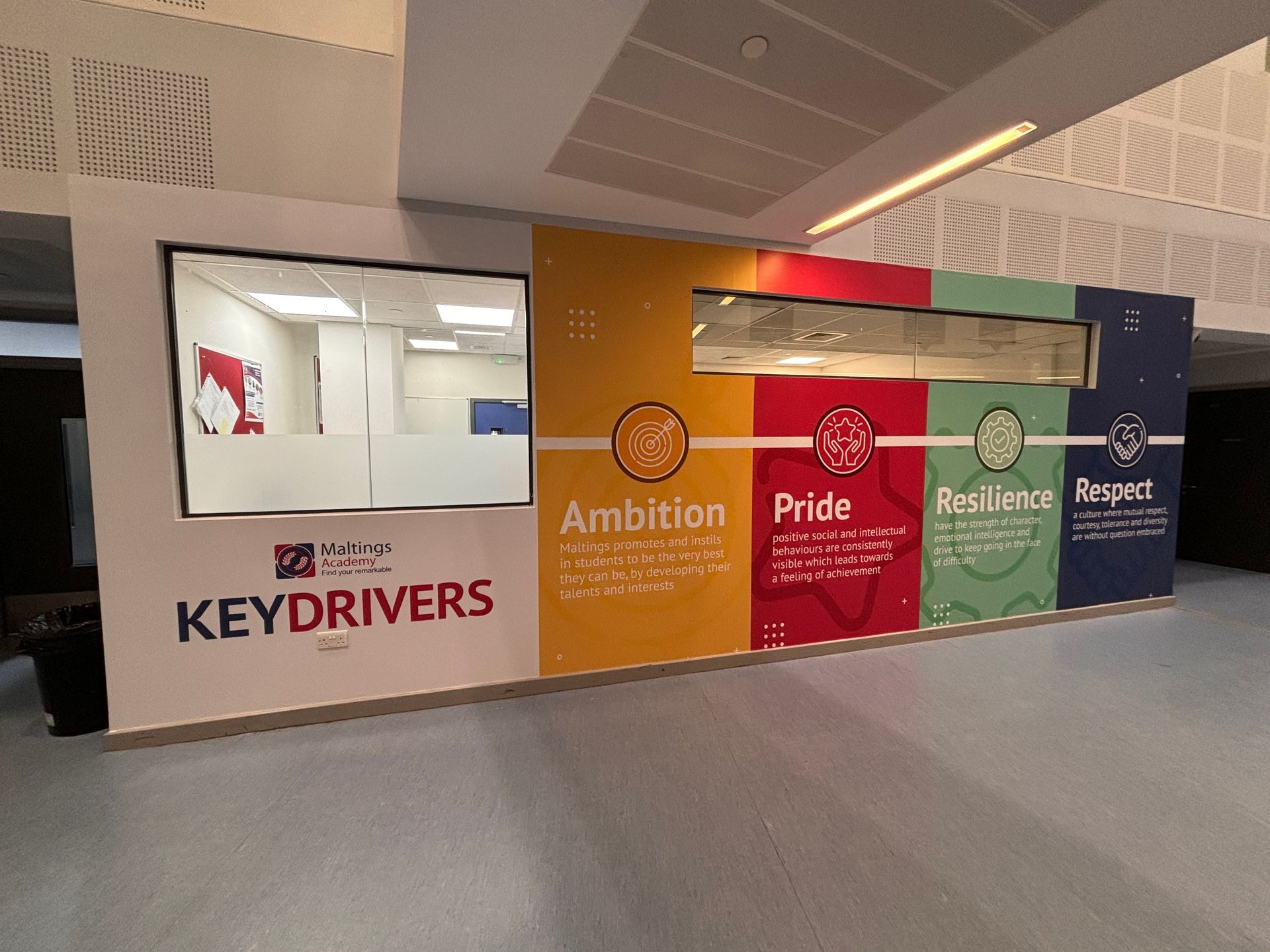
Utilising Wall Graphics for Enhanced Learning through Passive Reinforcement


Wall graphics specifically created for reinforcement can provide exposure to key concepts, helping students better absorb and retain information in the long run. Here is a comprehensive guide on utilising wall graphics for reinforcement across various academic subjects;


Key Design Principles


1. Visibility and Accessibility;

  • Strategic Placement: Position graphics in high-traffic areas like hallways, cafeterias and shared spaces where students frequent.
  • Eye Level Display: Ensure that the graphics are placed at eye level to ensure they are easily seen and readable by all students.


2. Repetition and Familiarity;

  • Consistent Themes: Use recurring themes and symbols throughout areas to reinforce ideas.
  • Regular Updates: Periodically refresh the content of the graphics to maintain engagement and relevance.


3. Interactive and Engaging Features;

  • Interactive Elements: features that encourage interaction, such as flaps, sliders or touch-sensitive components.
  • AR Integration: Integrate reality elements to provide layers of information accessible through smartphones or tablets.
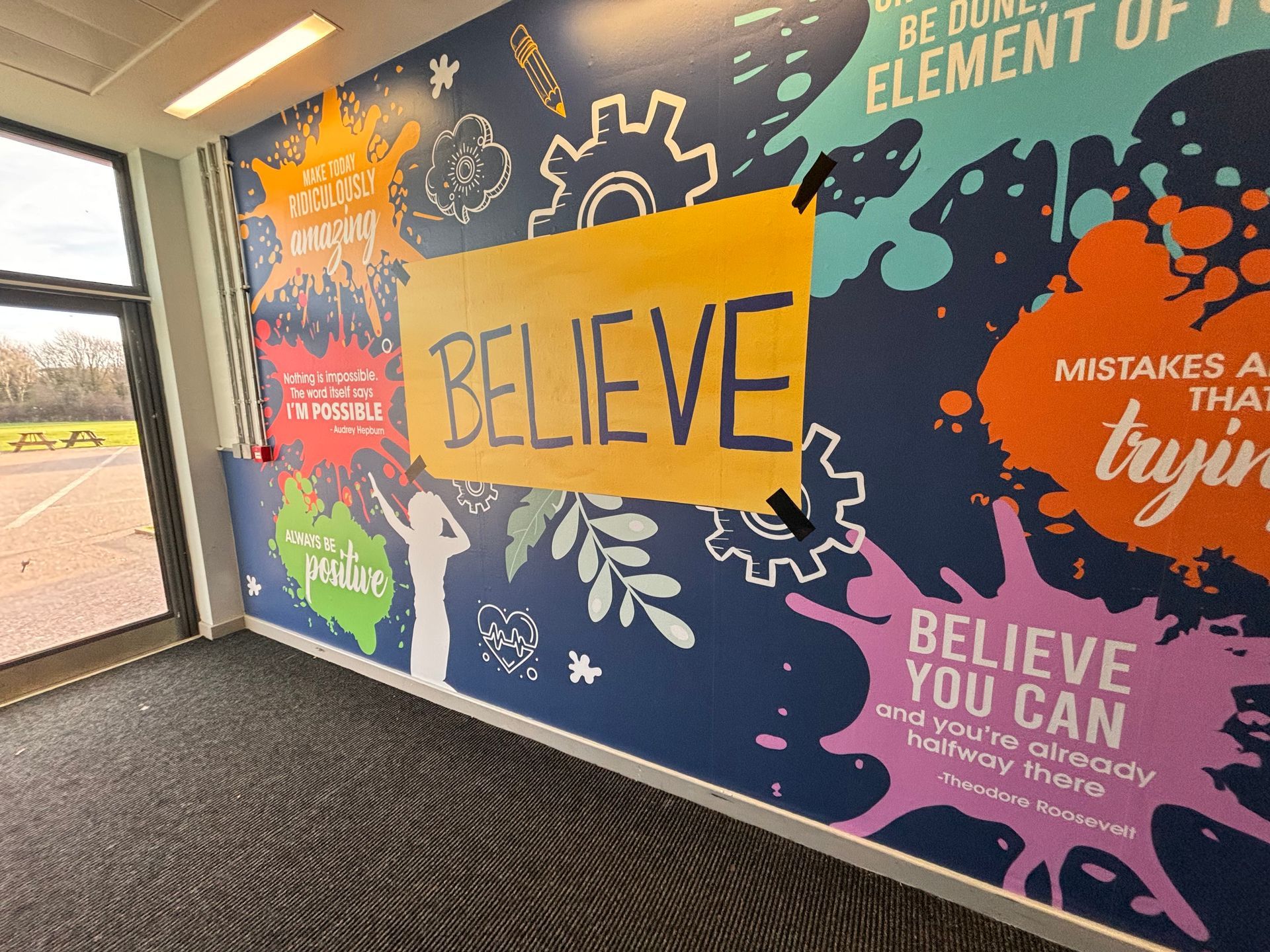
Subject Specific Wall Graphics


Science;


1. 1. The Periodic Table;

  • Organise elements by colour to distinguish between metals, nonmetals, and gases and share tidbits about each one.
  • Augmented Reality Experience: Have students use an AR app to explore the structures of elements and their properties.


2. Understanding Human Anatomy;

  • Visual Representations: Develop wall diagrams showcasing skeletal, muscular, and circulatory systems that can be examined individually or collectively.
  • Tactile Learning with 3D Models: Utilize tactile models of organs and structures that students can interact with to enhance their learning experience.


3. Exploring Life Cycles and Ecosystems;

  • Illustrate Life Cycles: Create visuals illustrating the life cycles of plants, animals, and insects in a step-by-step format.
  • Mapping Ecosystems: Showcase interconnected relationships within ecosystems through maps emphasising food chains and habitats.


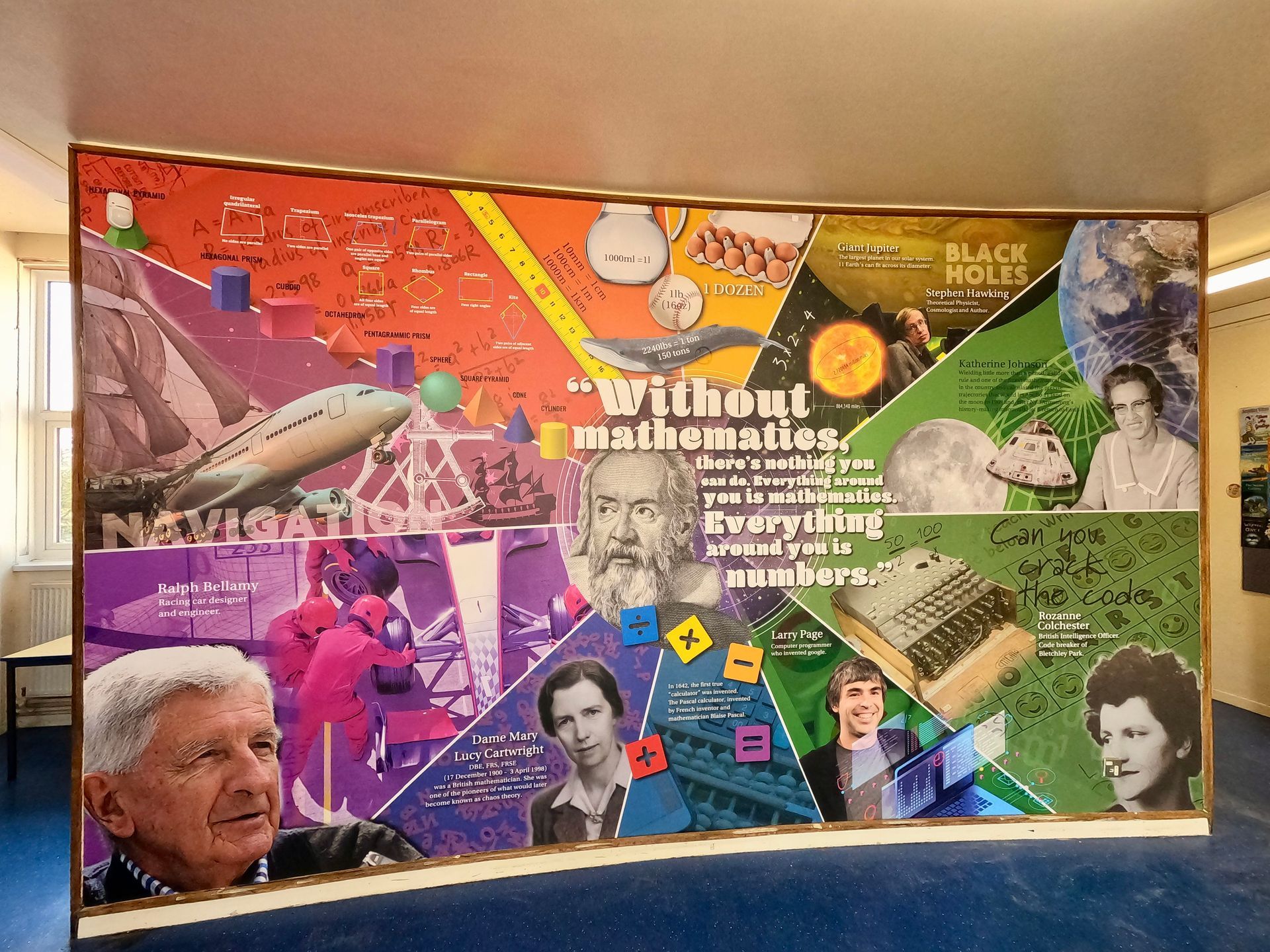
Mathematics;


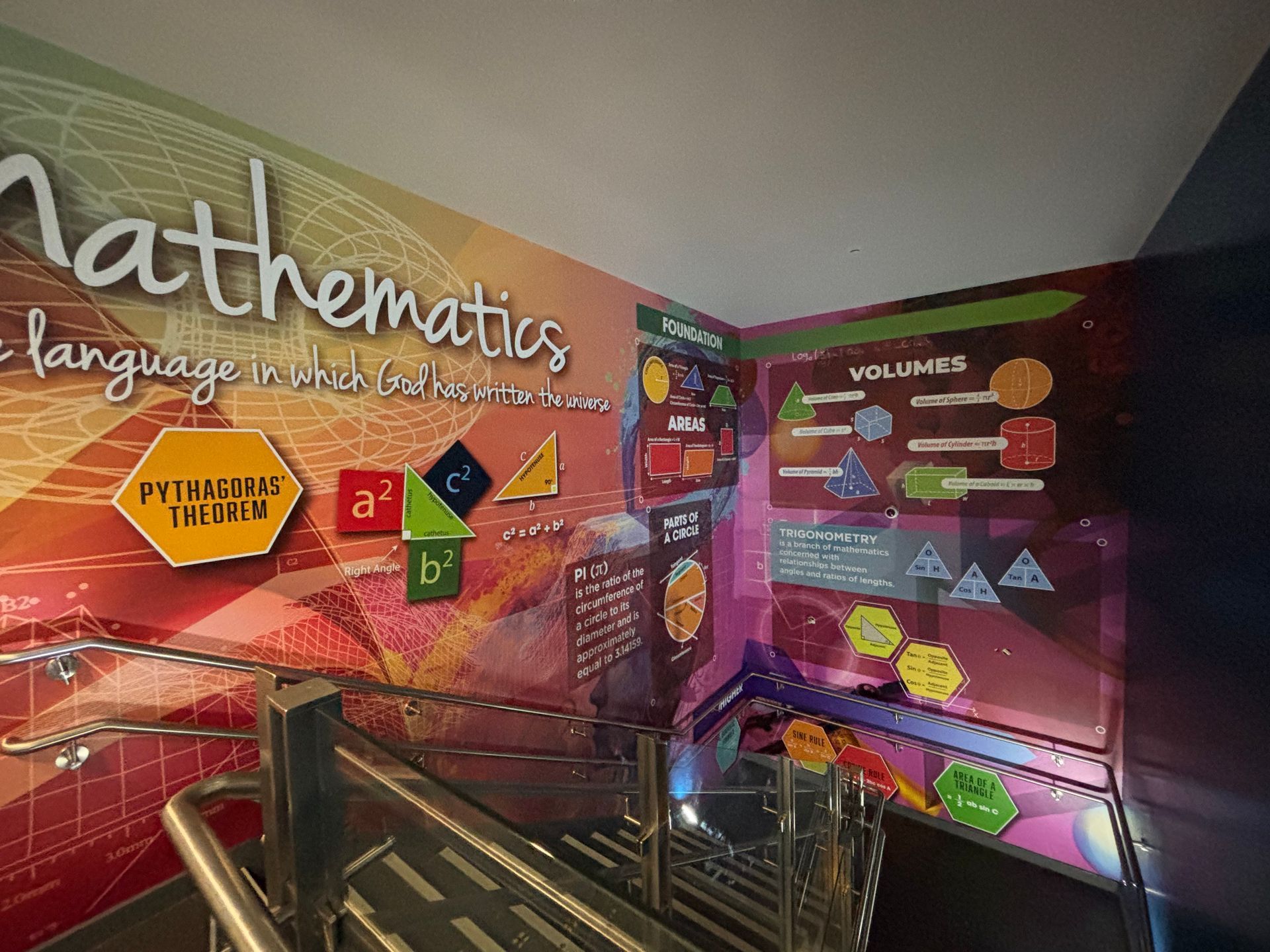
1. Formula Displays;

  • Present equations along with their derivations and real-world applications to help students grasp formulas effectively.
  • Visual Problem Solving Guides: Offer illustrated solutions for math problems and equations in a step-by-step manner.


2. Shapes and Their Properties;

  • Shape Descriptions: Display shapes alongside their respective properties, area calculations and volume formulas.
  • Interactive Demonstrations: Incorporate elements that enable students to manipulate shapes for an understanding of geometric concepts.3. Using Visual Aids for Teaching;
  • Incorporating lines and coordinate grids when teaching addition, subtraction, and graphing concepts is recommended.


History;


1. Utilizing Timelines and Maps;

  • In history lessons, presenting timelines with accompanying images and brief descriptions can help students visualise the sequence of events over time.
  • Highlighting Geographic Changes: Utilizing maps to showcase shifts in trade routes, the evolution of essential events, and other important events can enhance students' comprehension of historical contexts.


2. Exploring Historical Figures and Biographies;

  • Featuring portraits of figures alongside concise biographies detailing their contributions effectively engages students in learning about pivotal individuals from the past.
  • Integrating Interactive AR: By incorporating augmented reality (AR) technology that offers insights into historical events and figures when scanned, students can have a more interactive learning experience.


Language Arts;


1. Incorporating Grammar and Syntax Charts;

  • To facilitate grammar learning, visual aids such as charts illustrating grammar rules, sentence structures, and punctuation marks with examples can help students grasp language conventions. 
  • Encouraging Interactive Writing Spaces: Providing areas where students can practice sentence construction and engage in grammar exercises promotes learning in language arts studies.


2. Exploring Literary Timelines and Devices;

  • Illustrating periods, their defining characteristics, notable authors, and significant works helps students contextualise literature within its historical framework.
  • Explaining Literary Devices: Clarifying terms like metaphors or similes through examples from literature enables students to comprehend literary concepts more quickly.


3. Enhancing Vocabulary Acquisition;

  • It introduces a "Word of the Day" section that includes definitions and usage examples to foster expansion among students engaging with language arts materials. Interactive Word Games: Incorporate puzzles or word searches that are updated regularly.


Art;


1. Art Techniques;

  • Overview of Movements: Art movements, with examples of famous works and brief descriptions.
  • Guides on Techniques: Offer step-by-step instructions for art techniques, such as shading and perspective.


2. Understanding Colour Theory and Composition;

  • Exploring Colour Wheels; Showcase colour. Explain concepts of colour mixing, harmony and contrast.
  • Rules of Composition: principles like the rule of thirds and leading lines.


Approach to Implementation


1. Collaborative Development;

  • Involvement of Teachers: Collaborate closely with educators to align visuals with objectives and ensure they enhance lesson plans.
  • Student Involvement: Engage students in the process, allowing them to contribute ideas and artwork.


2. Emphasis on Quality and Longevity;

  • Use of Durable Materials: Opt for quality, lasting materials that can withstand frequent use.
  • Sustainable Practices: Select eco materials and printing methods to reduce impact.


3. Encouraging Engagement and Updates;

  •  Refreshing: Periodically update the visuals to reflect themes, seasons or current affairs.
  • Feedback Mechanism: Establish a feedback system to continuously gather input from students and teachers to enhance the designs.


4. Education and Assistance;

  • Teacher Preparation: Offer guidance to educators on utilising visuals as teaching tools.
  • Student Guidance: Instruct students on engaging with visuals and integrating them into their studies.


Implementing these approaches and values, wall graphics can serve as a resource for reinforcing learning, aiding students in better absorbing and remembering information through regular exposure.
By angel May 15, 2026
As we move through the middle of the school year, your thoughts are likely already drifting toward the summer holidays. Not just for the much-needed break, but for the opportunity it brings. When the corridors fall silent and the classrooms sit empty, your building finally has the chance to breathe. This is the window for the "September Reset" , that magical moment when students return to find their environment transformed, sparking a renewed sense of pride and curiosity. At Cubed Creative, we’ve spent the last few months working on something special to help you plan that transformation. We are thrilled to announce the launch of our brand new 2026 School Wall Art Brochure . It’s more than just a catalogue of past work; it’s the ultimate guide for a "September Reset" . It’s a toolkit for school leaders who want to move beyond tired noticeboards and plain magnolia walls. It’s packed with fresh inspiration, curriculum-linked designs, and the practical details you need to make a project happen during the summer break. Why Now? The Power of the September Reset The environment your pupils walk into on that first Tuesday in September sets the tone for the entire academic year. It’s a physical manifestation of your school’s expectations, its warmth, and its ambition. A "September Reset" isn’t just about making things look "pretty." It’s a strategic move to: Reinforce school values from the moment a child enters the gates. Reduce anxiety by creating calming, supportive spaces for wellbeing. Boost learning by turning "dead space" into passive learning zones. Improve behaviour through high-quality environments that show students they are valued. By planning your Summer wall art now, you ensure that all the heavy lifting: the design, the printing, and the installation: happens while the school is empty. You get the "wow factor" without any disruption to the school day. 21 Years of Creative Excellence When you’re looking for a partner to transform your school, experience matters. We’ve been working in the education sector for 21 years. Over those two decades, we’ve seen trends come and go, but our core mission has remained the same: to create environments that inspire. We understand the unique pressures of the UK education system. We know that budgets are tight, timelines are non-negotiable, and the materials used need to be "school-proof." Our 21 years of expertise mean we don’t just "put stickers on walls": we understand how to design for impact and install for longevity. What’s Inside the 2026 Brochure? The new brochure is designed to help you navigate the different ways wall art can support your School Improvement Plan. Here’s a sneak peek at the key areas we cover:
By angel April 17, 2026
You’ve seen it before. A beautiful, vibrant wall display that looked incredible on the day it was installed. Fast forward six months, and the edges are starting to curl. A year later, it’s peeling away at the corners, or the vibrant blues and reds have started to look a little tired and faded. In a busy school environment, "good enough" usually isn't. When you are looking to transform your school corridors, reception areas, or classrooms, it is easy to focus entirely on the design. After all, the design is what tells your story. It’s what inspires your pupils and impresses your visitors. But the material those designs are printed on? That is what determines whether your investment lasts for a decade or ends up in the bin before the next OFSTED inspection. At Cubed Creative , we’ve spent 21 years working inside schools. We know that a corridor isn't just a walkway; it’s a high-traffic zone where hundreds of blazers, backpacks, and wandering hands pass by every single hour. Choosing the right school wall graphics materials is the difference between a long-term asset and a short-term headache. The Science of the "Shrink": Monomeric vs. Polymeric Vinyl If you’ve been gathering quotes for school wall graphics , you might have noticed a significant range in pricing. Often, the "cheaper" quotes are using what we call Monomeric vinyl. To keep it simple: vinyl is made of plasticisers. In monomeric vinyl, these molecules are short and "unbound." Over time, especially when subjected to the fluctuating temperatures of a school building, these molecules migrate. The result? The vinyl literally shrinks. When vinyl shrinks on a wall, it pulls away from the edges. It leaves a sticky, unsightly residue that attracts dust and dirt. It looks poor, and more importantly, it becomes a target for inquisitive fingers to pick at. This is why we champion polymeric vinyl school graphics  Polymeric vinyl is engineered with longer molecular chains. It is far more stable. It doesn't shrink, it doesn't curl, and it stays exactly where we put it. It’s the gold standard for long-lasting school wall displays . When we talk about durability, we aren't just talking about the print staying bright; we’re talking about the material staying bonded to the wall.
By Gary Boad April 6, 2026
The morning rush. You know the one. It is a whirlwind of lost shoes, half-eaten toast, and the ticking clock. Then comes the final hurdle: the school gate.
By angel March 20, 2026
We’ve all been there. It’s 4:00 PM on a Tuesday, you’re armed with a staple gun that’s seen better days, and you’re staring at a vast expanse of blue sugar paper that refuses to stay flat. You want your classroom to be an inspiring hub of learning, but by the time the final border is pinned, it looks more like a chaotic explosion in a stationery shop. At Cubed Creative, we’ve spent the last 21 years helping schools transform their environments. We’ve seen the good, the bad, and the "why is that poster from 1994 still there?" The truth is, your walls are more than just partitions between rooms. They are silent teachers. When used correctly, school wall graphics can boost engagement and reinforce key concepts. When used poorly, they become a distracting mess that hinders focus. Here are the seven most common mistakes schools make with classroom wall displays, and, more importantly, how you can fix them. 1. The "Everything but the Kitchen Sink" Approach There is a common misconception that a "good" classroom is a covered classroom. We feel the urge to fill every square inch of brickwork with posters, bunting, and student work.  The Mistake: Visual overload. Research suggests that heavily decorated classrooms can actually decrease student performance. When every wall is screaming for attention, the brain struggles to filter out the noise. This leads to cognitive overload, particularly for pupils with SEND or sensory processing sensitivities. The Fix: Aim for the 20% rule. Keep at least 20% of your wall space clear. This "white space" gives the eyes a place to rest and allows the important displays to actually stand out. Think quality, not quantity.
By angel March 2, 2026
An Open Evening is not just an event on the calendar. It is a defining moment. Before the results are discussed. Before the curriculum is explained. Before questions are asked. Families are already forming an opinion. And your environment is leading that conversation. The Challenge: You Only Get One First Impression When parents walk through your doors, they are looking for reassurance. Is this school calm? Is it ambitious? Does it feel purposeful? Will my child belong here? A blank wall is a mystery. An inconsistent board confuses. A wall that has not changed for months or years is an indicator that communication with the wall is not important. But clear, intentional design builds confidence immediately. Your space either reinforces your message — or distracts from it.
By Gary Boad February 21, 2026
Step into any hallway at school. Something sits there before any text shows up at all. Quiet. A spark of drive. Heat in your steps. Yet at times, everything feels too heavy to carry A flash of colour stirs something deep, almost right away. Inside classrooms, that instinctual reaction holds weight - greater than many allow themselves to see. What keeps people okay isn't only rules or school counsellors. It shows up in each part of the daily world that kids navigate.
By angel February 13, 2026
A school hallway might hold paintings, award posters, and a time chart. Imagine stepping inside a quiet hallway. What happens if young learners find themselves wandering past moments from long ago? Every day, history timeline walls quietly spark interest. They transform ordinary rooms into moments where people pause, talk, and wonder. Curiosity grows without fanfare. Culture comes alive through simple displays. Conversations start where none were expected.
By angel February 7, 2026
Before a single word is spoken, a school has already started talking. From the moment someone steps through the doors, the environment sends signals. Calm or cluttered. Confident or uncertain. Purposeful or forgotten. These first impressions shape how visitors feel — and how much trust they place in the school.
More Posts

Back to home